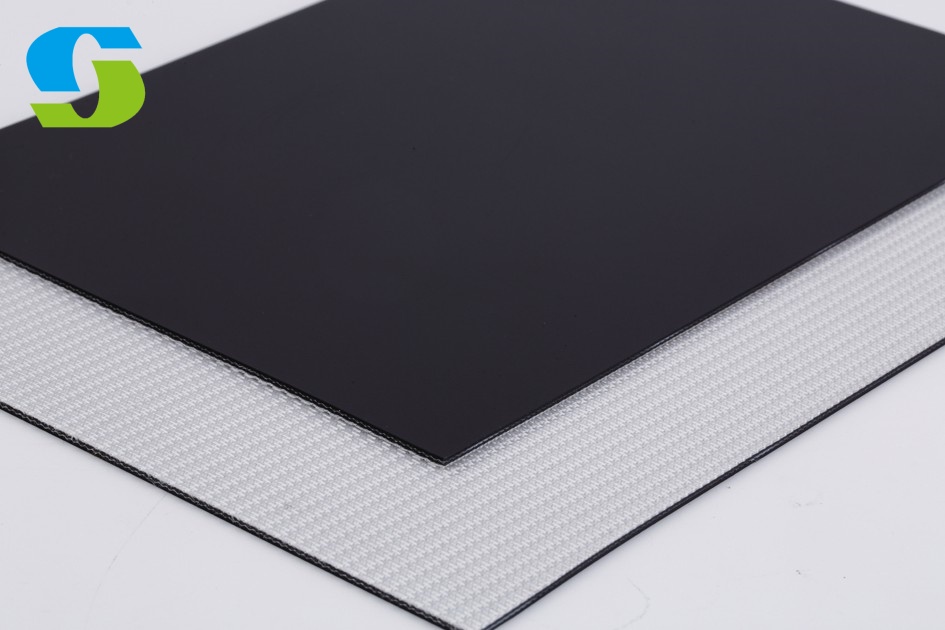
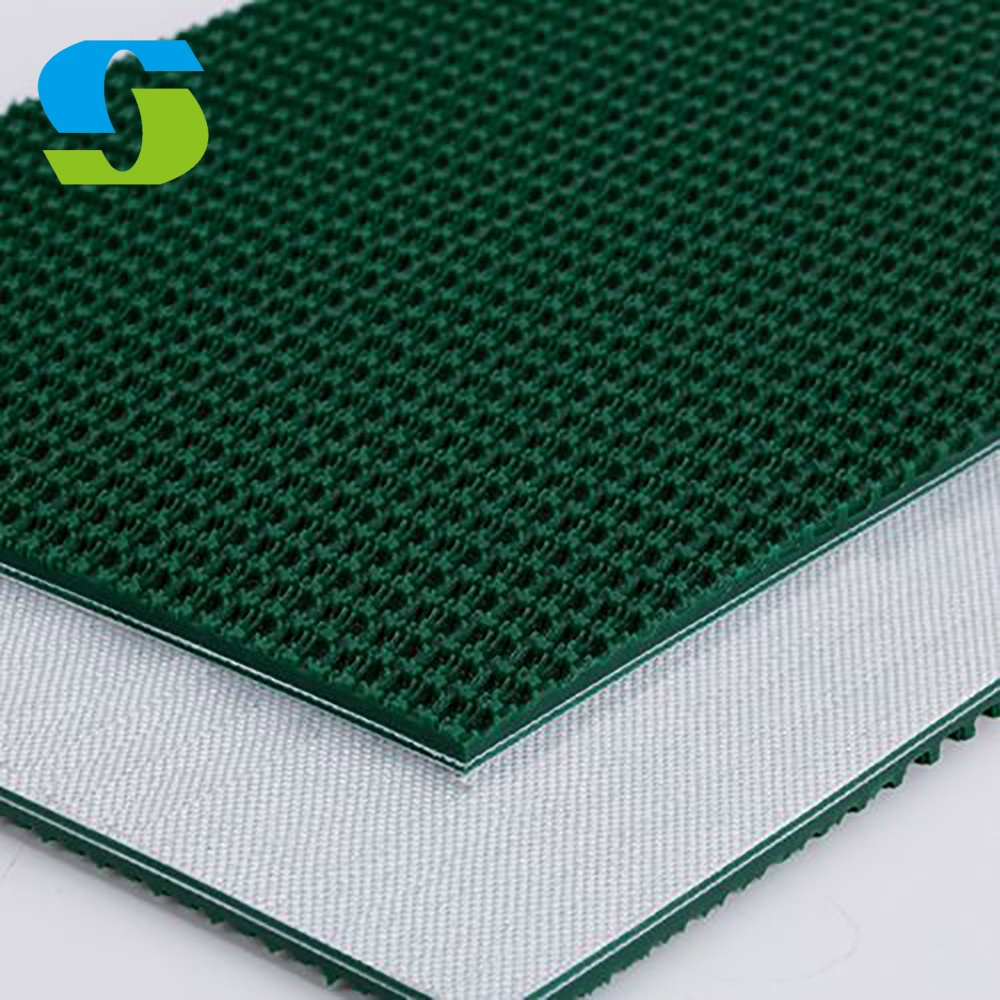
Article Abstract:
In modern conveyor systems, polyurethane (PU) and thermoplastic polyurethane (TPU) conveyor belts are often used interchangeably.
However, technical literature such as R.J. Crawford’s *Plastics Engineering*, polymer science research published in *Polymer Engineering & Science*, and ISO/EN standards for conveyor belt materials clearly distinguish the differences between PU and TPU in terms of molecular structure, processing properties, mechanical properties, and suitability for specific applications.
Based on these authoritative sources, this guide comprehensively explains the practical differences between PU and TPU conveyor belts, with a focus on the performance of TPU conveyor belts in harsh industrial environments.
Introduction: Why PU and TPU Conveyor Belts Are Often Confused?
When designing conveyor systems, material selection is rarely purely aesthetic. It directly impacts hygiene compliance, abrasion resistance, downtime, energy efficiency, and total cost of ownership. However, the conveyor belt industry still experiences considerable confusion regarding the difference between PU and TPU-Förderbänder.
At first glance, this confusion may seem understandable. Both materials are polyurethane-based, commonly used in food processing, logistics, and light industrial automation, and claim similar properties such as abrasion resistance and flexibility.
Many suppliers even directly refer to their conveyor belts as “PU-Förderbänder,” regardless of whether the base material is thermoset or thermoplastic.
However, from a materials science perspective, PU and TPU are not the same, and this distinction becomes increasingly important as production lines demand higher speeds, stricter hygiene standards, and longer service life. Understanding this difference is crucial for anyone responsible for specifying or procuring TPU conveyor belts.
Understanding Polyurethane as a Material Family
Before directly comparing polyurethane (PU) and thermoplastic polyurethane (TPU) conveyor belts, it’s essential to understand that polyurethane is not a single homogeneous material, but rather a family of polymers. Polyurethane can be processed into foams, elastomers, coatings, adhesives, and solid conveyor belts, and its properties can be precisely controlled through chemical composition and processing methods.
The key difference lies in the cross-linking mechanism of the polymer chains:
- PU (thermosetting polyurethane) forms an irreversible cross-linked structure.
- TPU (thermoplastic polyurethane) consists of linear or slightly branched polymer chains and softens upon heating.
This structural difference has a profound impact on the performance, processing, and recyclability of the conveyor belt.
What Is a PU Conveyor Belt?
-
Chemical Structure and Processing Properties
Traditional polyurethane (PU) conveyor belts are typically made of thermosetting polyurethane. During manufacturing, the polymer undergoes a curing reaction, forming permanent cross-links between the molecular chains. Once cured, the material cannot be melted or reshaped.
This cross-linked structure gives PU conveyor belts good dimensional stability and chemical resistance. However, this also limits their reprocessing or welding properties after curing, thus affecting the manufacturing and maintenance options for the conveyor belt.
-
Typical Performance Characteristics
PU conveyor belts are characterized by:
- Moderate abrasion resistance
- Good oil and grease resistance
- Stable performance in standard industrial environments
However, because the material does not soften upon reheating, PU conveyor belts offer less flexibility in terms of customization and connection methods.

What Is a TPU Conveyor Belt?
-
Thermoplastic Polyurethane (TPU) – Basics
TPU conveyor belts are made of thermoplastic polyurethane, a block copolymer composed of hard and soft segments. Due to its unique molecular structure, TPU is elastic under stress while retaining its fusibility.
When heated, TPU softens without decomposing, allowing for repeated extrusion, welding, or reshaping. Upon cooling, it regains its mechanical strength. This thermoplastic property is one of the key advantages of TPU conveyor belts.
-
Key Performance Advantages
TPU conveyor belts possess the following characteristics:
- Excellent abrasion and cut resistance
- High elasticity and resilience
- Excellent flexibility at low temperatures
- Easy to weld and maintain
These properties make TPU conveyor belts particularly suitable for high-speed and high-cycle conveying systems.
Fundamental Differences Between PU and TPU Conveyor Belts
|
Aspect |
PU-Förderband | TPU Conveyor Belt |
|
Polymer Type |
Thermoset polyurethane |
Thermoplastic polyurethane |
|
Re-melt Capability |
No |
Yes |
|
Weldability |
Limited |
Excellent |
| Abnutzungswiderstand | Moderate |
High |
| Elastic Recovery | Moderate |
Excellent |
Mechanical Performance Comparison in Conveyor Applications
- Abrasion and Wear Resistance
In conveyor systems, abrasion resistance is one of the most important parameters for conveyor belt lifespan. Due to its segmented molecular structure, TPU conveyor belts dissipate energy more effectively during repeated contact with the conveyed material, resulting in significantly better performance than PU conveyor belts in abrasive environments.
This makes TPU conveyor belts particularly suitable for applications with sharp edges, granular materials, or frequent start-stop cycles.
- Tensile Strength and Elongation
PU conveyor belts typically have a lower elongation at break than TPU conveyor belts. While this can be advantageous in applications requiring dimensional stability, it also makes PU conveyor belts more prone to cracking under cyclic loads. TPU conveyor belts offer a more balanced combination of tensile strength and elongation, reducing the risk of fatigue fracture in dynamic systems.
Temperature Resistance and Environmental Performance
Operating Temperature Range
PU conveyor belts generally perform well within a moderate temperature range, but they become brittle at low temperatures and undergo irreversible softening at high temperatures.
TPU conveyor belts, on the other hand, maintain their flexibility at low temperatures and recover their performance after temperature changes, making them more suitable for cold storage, refrigerated processing, and environments with large temperature fluctuations.
Hygiene and Food-Grade Compliance
Regulatory Considerations
Both PU and TPU conveyor belts can be formulated to meet FDA and EU food contact regulations.
However, TPU conveyor belts are more commonly used in environments with high hygiene requirements due to their smooth surface and weldable seams, which reduce bacterial growth.
The ability to produce continuous conveyor belts with uniform joints is a significant advantage for the food processing and pharmaceutical industries.
Chemical Resistance and Cleaning Compatibility
TPU conveyor belts exhibit excellent resistance to oils, greases, and various cleaning agents commonly used in CIP (Clean In Place) systems.
While PU conveyor belts also perform well in these aspects, the superior resistance of TPU conveyor belts to repeated chemical corrosion makes them even more advantageous in harsh cleaning environments.
Manufacturing and Fabrication Differences
Belt Joining and Repair
One of the most important practical differences between PU and TPU conveyor belts lies in their joining technology. PU conveyor belts typically require mechanical fasteners or adhesives for joining, which can create weak points in the connections.
TPU conveyor belts, on the other hand, can be seamlessly joined into loops via thermal welding, significantly improving strength and hygienic properties.
Application-Specific Suitability
- Lebensmittelverarbeitung und -verpackung
TPU conveyor belts dominate the market in baking production lines, meat processing, and dairy production due to their ease of cleaning and durability.
- Logistics and Automation
TPU conveyor belts are the preferred choice for logistics centers and automated warehouses due to their low noise, high flexibility, and durability in continuous operation.
- Light Industry and General Conveying Technology
PU conveyor belts remain widely used in environments where cost is a primary consideration and performance requirements are lower.
Cost Considerations and Lifecycle Economics
|
Factor |
PU-Förderband | TPU Conveyor Belt |
|
Initial Cost |
Lower |
Higher |
| Service Life | Moderate |
Long |
| Maintenance Cost | Medium |
Low |
| Total Lifecycle Cost | Medium |
Often Lower |
Although TPU conveyor belts generally have a higher upfront cost, their longer service life and reduced maintenance often result in a lower total cost of ownership.
Common Misconceptions About PU and TPU Conveyor Belts
Although polyurethane (PU) and thermoplastic polyurethane (TPU) conveyor belts are widely used in industries such as food processing, logistics, pharmaceuticals, and the light industry, there are often misconceptions about them. These misconceptions can lead to incorrect material selection, thereby increasing operating costs.
Misconception 1: PU and TPU are the same material.
Many buyers believe that PU and TPU are interchangeable.
Fact: PU is a general term for polyurethane materials, which can be thermosetting polyurethane or thermoplastic polyurethane. TPU is a special type of thermoplastic polyurethane with more stable mechanical properties, higher elasticity, and better processability.
In the conveyor belt industry, TPU generally has better abrasion resistance, flexibility, and weldability than traditional PU.
Misconception 2: TPU conveyor belts are always better than PU conveyor belts.
TPU conveyor belts are often seen as a general upgrade option.
Fact: TPU performs exceptionally well in applications requiring high abrasion resistance, high flexibility, and high-precision conveying. Standard PU conveyor belts are more economical and suitable for low-speed, light-load, or non-critical environments.
“Better” depends on the application conditions, not just the material name.
Misconception 3: PU/TPU conveyor belts are only for the food industry.
PU and TPU conveyor belts are often associated with food-grade conveyor systems.
Fact:
While both materials meet FDA/EU food contact standards, they are also frequently used in:
Logistics and sorting systems
Packaging lines
Electronic assembly
Medical technology
They are easy to clean and have low particle abrasion, making them ideal for applications outside of food processing.
Misconception 4: All TPU conveyor belts are the same.
Some buyers believe that TPU conveyor belts from different manufacturers are identical.
Fact:
Performance varies significantly and depends on:
TPU composition (hardness, additives)
Reinforcement type (woven, cord, integral)
Manufacturing process and quality control
The manufacturer’s expertise and material composition are just as important as the base material.
Misconception 5: PU/TPU conveyor belts are not suitable for heavy-duty applications.
It is a common misconception that PU and TPU conveyor belts are only suitable for light-duty applications.
The truth is: with the right reinforcement materials and thickness, PU and TPU conveyor belts can withstand medium to heavy-duty loads, and are particularly suitable for stacking and inclined conveyor systems.
Future Trends in Conveyor Belt Materials
With increasing standards for automation, sustainability, and hygiene, conveyor belt materials, including polyurethane (PU) and thermoplastic polyurethane (TPU), are undergoing rapid innovation.
- Advanced TPU Formulations
The development of new TPU compounds aims to provide:
Higher cut and abrasion resistance
Superior hydrolysis and chemical resistance
Wide operating temperature range
This expands the application range of TPU conveyor belts to more demanding industrial environments.
- Sustainable and Environmentally Friendly Materials
Environmentally, the following are driving developments:
Bio-based polyurethane
Recyclable and low-VOC TPU materials
Longer conveyor belt lifespan, reducing replacement frequency
Future conveyor belts will place greater emphasis on a balance between performance and environmental sustainability.
- Improved Hygiene and Antimicrobial Surfaces
Especially in the food and pharmaceutical industries, the following trends include:
Antibacterial TPU surfaces
Non-porous, easy-to-clean conveyor belt designs
Compliance with stricter global hygiene standards
These innovations reduce the risk of contamination and downtime.
- Smart Conveyor Belts and Integration
Materials development is driven by the Industry 4.0 trend:
TPU conveyor belts are compatible with sensors and tracking systems
Improved dimensional stability to meet the demands of high-speed automated production lines
Material consistency is crucial for precise conveying.
- Customized Design and Application of Specific Structures
Manufacturers are no longer limited to standard conveyor belts but are focusing on:
Application of specific TPU and PU blends
Customized coefficient of friction, hardness, and surface texture
This trend improves system efficiency and reduces the total cost of ownership.
Frequently Asked Questions (FAQ)
Is TPU better than PU for conveyor belts?
In most dynamic, hygienic, or heavy-duty applications, TPU conveyor belts outperform traditional PU conveyor belts.
Can TPU conveyor belts be welded?
Yes. TPU conveyor belts can be thermally welded, resulting in seamless connections and easy maintenance.
Do TPU conveyor belts meet food safety standards?
Many TPU conveyor belts comply with FDA and EU regulations, making them suitable for food processing.
Why are TPU conveyor belts more expensive?
Higher material properties, better processability, and longer service life result in a higher initial cost.
When is a PU conveyor belt still a good choice?
PU conveyor belts are suitable for low-speed, low-wear, and cost-sensitive applications.
Conclusion: Choosing Between PU and TPU Conveyor Belts
What are the differences between PU and TPU conveyor belts? Although both are based on polyurethane, their structural differences result in different performance characteristics.
PU conveyor belts are advantageous due to their simple structure and low cost, while TPU conveyor belts are known for their superior durability, flexibility, hygiene, and longer service life.
For modern conveyor systems—especially in food processing, logistics automation, and high-load applications—TPU conveyor belts are increasingly becoming the preferred solution.