Abstract
Bandes transporteuses play a vital role in contemporary industrial and material handling systems, facilitating the effective movement of bulk materials, packaged items, and precision products throughout manufacturing, logistics, and mining activities.
The performance, durability, and safety of a conveyor system rely significantly on the composition and engineering of the conveyor belt itself, according to Handbook of Conveyor Belt Design by Edward W. Loewenstein and research in the Journal of Material Handling Engineering. Conveyor belts are made from a mix of polymers, textiles, metals, and composite materials to fulfill different operational needs, including load capacity, chemical resistance, temperature tolerance, and abrasion strength.
This industry guide for 2026 offers a thorough overview of conveyor belt materials, covering types, construction techniques, performance features, uses, maintenance approaches, and new innovations.
Introduction: The Importance of Conveyor Belts in Industrial Operations
Conveyor belts form the backbone of material handling across industries such as food processing and packaging, mining, and heavy manufacturing. Their main role is to enable the ongoing, regulated movement of goods, which decreases manual effort, boosts productivity, and enhances safety at work. The selection of belt material has a direct impact on operational efficiency, the durability of equipment, and adherence to safety standards.
Understanding what conveyor belts are made of is essential for:
- Manufacturers creating custom belt solutions
- Facility engineers improving material flow
- Procurement teams choosing durable and cost-effective products
- Safety officers ensuring adherence to industry standards
As global automation and logistics demand increases in 2026, knowing belt composition, performance features, and maintenance needs has become more critical than ever.
What is a Conveyor Belt?
A conveyor belt is a system of material that forms a loop and moves over pulleys or rollers, carrying products and materials from one location to another. It can be constructed from various materials designed to endure mechanical stress, environmental conditions, and operational wear.
Core Functions of Conveyor Belts:
- Material transportation across distances
- Load distribution and impact absorption
- Resistance to abrasion, chemicals, and heat
- Integration with automated systems
Components
|
Component |
Description |
|
Belt Material |
The continuous loop (rubber, PVC, PU, metal) |
|
Core/Fabric Layer |
Provides tensile strength and flexibility |
| Cover Layers |
Protect against wear, chemicals, or heat |
| Fasteners/Splicing |
Join belt ends and facilitate repairs |
Materials Used in Conveyor Belts
- Rubber-Based Conveyor Belts
Rubber is the most frequently used material because of its durability, flexibility, and grip qualities.
Characteristics:
- It offers excellent abrasion resistance.
- It has high tensile strength.
- It is suitable for handling bulk materials.
- It can endure moderate heat and chemical exposure.
Applications : Mining, cement, quarrying, and general bulk material handling.
- Plastic and Polymer Conveyor Belts
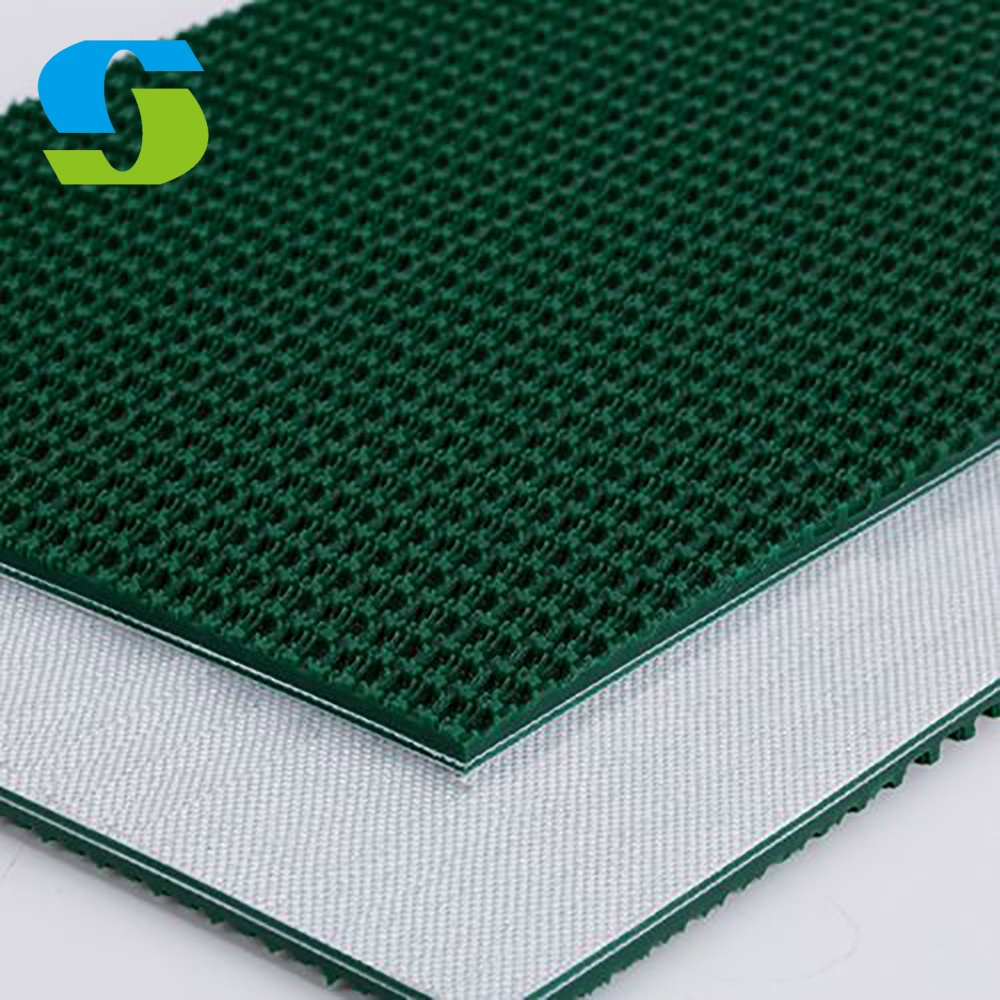
Polymers like PVC (polyvinyl chloride) and PU (polyurethane) are commonly employed in light to medium-duty tasks.
Characteristics:
- They have a smooth surface suitable for food-grade applications.
- They are resistant to water, oils, and mild chemicals.
- They are easy to clean and maintain.
Applications : Include food processing, pharmaceuticals, and electronics assembly.
- Metal Conveyor Belts
Metal belts, constructed from stainless steel, carbon steel, or alloy sheets, are utilized in environments with high temperatures or heavy-duty requirements.
Characteristics:
- They can tolerate high heat.
- They possess exceptional strength.
- They are resistant to fire and extreme wear.
Applications: Include steel manufacturing, foundries, and oven conveyors.
- Fabric-Reinforced Conveyor Belts
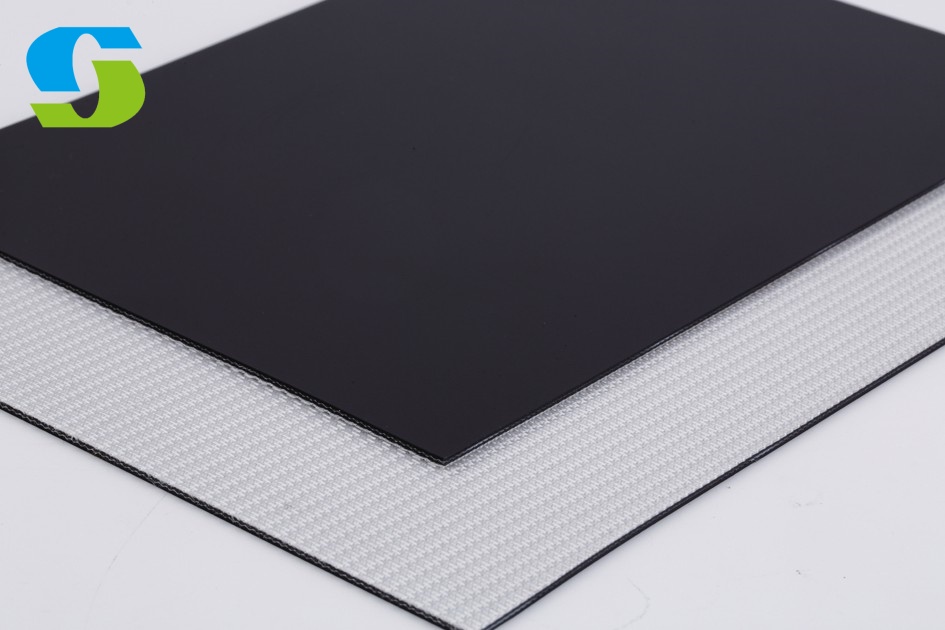
These belts feature textile layers such as cotton, polyester, or nylon to improve flexibility and tensile strength.
Characteristics:
- Lightweight yet strong
- Absorbs impact and reduces shock
- Can be combined with rubber or polymer covers
Applications : Light industrial, packaging, and textile industries.
Conveyor Belt Material Table
|
Material Type |
Key Feature | Typical Use |
|
Rubber |
Abrasion-resistant, durable | Mining, cement |
| PVC/PU | Food-safe, water-resistant |
Food processing |
| Metal | High-strength, heat-resistant |
Steel, ovens |
| Fabric-reinforced | Flexible, impact-absorbing |
Packaging, textile |
Construction Methods of Conveyor Belts
- Single-Ply Belts
A belt’s core consists of a single layer of fabric or polymer, suitable for light-duty transport.
- Multi-Ply Belts
Enhanced strength for medium and heavy loads is achieved through the bonding of multiple fabric or polymer layers.
- Modular Belt Systems
Flexible and durable belts are created by interlocking plastic or metal segments for specialized uses.
- Solid Woven Belts
High flexibility and tensile strength are provided by textile-based belts woven into solid sheets.
Conveyor Belt Construction Comparison Table
|
Construction Type |
Épaisseur | Strength | Application |
|
Single-Ply |
Thin | Low | Light-duty |
|
Multi-Ply |
Medium | High |
Bulk materials |
| Modular | Variable | High |
Specialized transport |
| Solid Woven | Medium | Medium |
Packaging, textiles |
Performance Characteristics of Conveyor Belts
The material composition directly determines key performance aspects:
Physical Properties
|
Property |
Rubber | PVC/PU | Metal | Fabric-Reinforced |
|
Résistance à la traction |
High | Medium | Very High | Medium |
|
Flexibilité |
Medium | High | Low | High |
| Résistance à l'abrasion | High | Medium | Very High |
Medium |
| Résistance chimique | Medium | High | High |
Low-Medium |
| Tolérance de température | Moderate | Low-Medium | Very High |
Moderate |
Advantages of Modern Conveyor Belts
Modern Conveyor Belt systems are designed to enhance efficiency, decrease labor requirements, and streamline material handling in various industries.
- High Efficiency and Automation
Allows for the uninterrupted movement of materials with little human involvement
Lowers handling time and boosts throughput
- Versatility Across Industries
Utilized in logistics, food processing, manufacturing, mining, and other sectors
Accommodates different load types, ranging from lightweight packages to heavy raw materials
- Customizable Design
Width, length, speed, and belt material can be tailored for specific applications.
Modular designs allow easy expansion or reconfiguration.
- Safety and Ergonomics
Modern belts include sensors, emergency stops, and anti-slip surfaces.
Reduces worker strain and risk of workplace injuries
Applications Across Industries
- Mines et carrières
Heavy-duty rubber or metal belts transport bulk ores and aggregates.
- Transformation des aliments
Plastic or polymer belts ensure hygiene, easy cleaning, and resistance to moisture.
- Manufacturing and Assembly
Fabric-reinforced and PVC belts handle lightweight products and packaged goods efficiently.
- High-Temperature Operations
Metal belts transport hot materials like molten steel or baked goods.
Conveyor Belt Application Table
|
Industry |
Belt Type | Key Benefit |
|
Mining |
Rubber | Abrasion-resistant, durable |
|
Food & Beverage |
PVC/PU |
Food-safe, easy to clean |
| Manufacturing & Packaging | Fabric-reinforced |
Flexible, lightweight |
| Steel & Heat Processing | Metal |
Heat-resistant, strong |
Entretien et longévité
Proper maintenance prolongs the lifespan of conveyor belts and guarantees reliable operation:
- Regular Inspections
Look for signs of wear, fraying, and misalignment.
Examine rollers, pulleys, and tension mechanisms.
- Cleaning and Lubrication
Clear away debris that may lead to abrasion or tracking problems.
Apply lubricant to moving parts when necessary.
- Correct Tensioning
Avoids slippage and uneven deterioration.
Improves energy efficiency and lessens motor load.
- Timely Replacement of Parts
Rollers, bearings, and belt segments should be replaced proactively
Avoids unexpected downtime and costly repairs
Common Issues and Solutions
|
Issue |
Cause | Solution |
|
Belt fraying |
Misalignment | Adjust alignment |
| Surface cracking | Exposure to heat/UV |
Use protective covers |
| Slippage | Loose tension |
Tighten the belt and pulleys |
| Abrasion | Heavy load |
Use reinforced material |
Industry Innovations (2026–2030)
- Smart Conveyor Belts
Integration of sensors for real-time monitoring of belt health, load, and speed.
- Eco-Friendly Materials
Development of biodegradable polymer belts and recycled rubber composites.
- Modular and Flexible Designs
Customizable modular belts for complex industrial layouts.
- High-Performance Composites
Metal-polymer hybrid belts that combine strength, durability, and lightweight performance.
Common Misconceptions
- “All conveyor belts are the same.”
Belts differ in material, strength, temperature resistance, and chemical compatibility; choosing the incorrect type can decrease efficiency.
- “Low-cost belts are sufficient.”
Inexpensive belts might reduce initial costs but tend to wear out more quickly, leading to higher maintenance and replacement costs.
- “Maintenance is only needed when problems arise.”
Regular preventive maintenance is crucial to prevent downtime, enhance safety, and extend the lifespan of belts.
- “Conveyor belts can handle any load.”
Overloading or using the wrong belt type can cause rapid wear, motor strain, and operational hazards.

FAQ: Conveyor Belts
- What are conveyor belts made of?
They can be made of rubber, plastic, metal, or fabric-reinforced materials, often in multi-layer constructions.
- Which conveyor belt material is best for mining?
Heavy-duty rubber or metal belts due to their abrasion resistance and load capacity.
- Are plastic conveyor belts suitable for food processing?
Yes, PVC and PU belts are food-safe and easy to clean.
- How long does a conveyor belt last?
With proper maintenance, 5–15 years, depending on the material and application.
- Can conveyor belts be repaired?
Yes, using splicing methods, patching, or modular replacements.
Conclusion
Conveyor belts are essential components in contemporary industrial and material handling systems. The materials used—such as rubber, polymers, metal, and fabric-reinforced structures—affect their durability, performance, and appropriateness for particular uses. Engineers, operators, and B2B buyers need to understand the materials, construction, and maintenance needs of conveyor belts to enhance operational efficiency, safety, and cost savings.
As smart, eco-friendly, and high-performance belt materials continue to emerge, 2026 presents a landscape where informed choices and technical expertise give manufacturers and industrial facilities around the world a competitive advantage.