Abstract
PVC conveyor belt systems are among the most widely used light- to medium-duty conveying solutions in modern industrial production, logistics, and packaging environments.
Technical references from the International Organization for Standardization and material studies published by the American Society for Testing and Materials state that polyvinyl chloride (PVC) conveyor belting is valued for its combination of abrasion resistance, chemical stability, flexibility, and cost-effectiveness in industrial transport applications. Due to these properties, PVC conveyor belts are widely used in food processing, packaging, warehousing, electronics manufacturing, agriculture, pharmaceutical production, and automated logistics systems.
This guide explains the uses of PVC conveyor belts, their optimal performance conditions, advantages and limitations, how they compare to alternative belt materials, and what buyers should consider before selecting one. The article also includes expert sourcing considerations and manufacturing insights from industry suppliers such as Wuxi Shun Sheng Industry.
Introduction: Why PVC Conveyor Belts Remain an Industry Standard?
In modern manufacturing and materials handling environments, conveyor systems are essential for improving efficiency, reducing labour costs, and enabling automated throughput. Of the many materials used for conveyor belts available today, PVC remains one of the most common and versatile options for light- and medium-duty industrial conveying.
Its popularity stems from the fact that PVC offers a practical combination of the following:
- durability
- affordability
- surface versatility
- easy fabrication
- broad chemical resistance
As industries increasingly demand efficient, hygienic, and customisable conveying solutions, PVC belts continue to be the preferred choice across diverse sectors.
What Is a PVC Conveyor Belt?
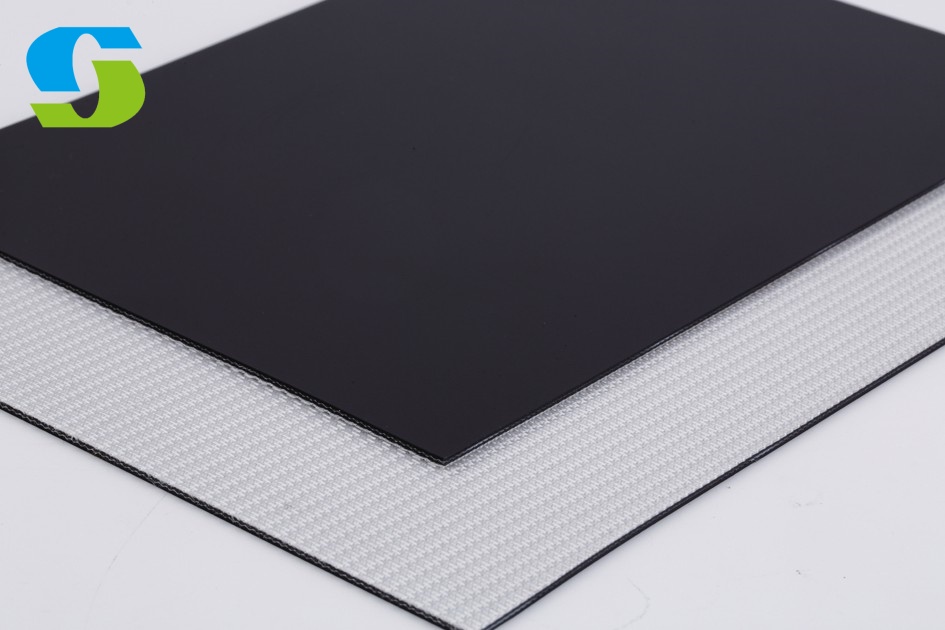
A PVC conveyor belt is a conveyor belt that is manufactured using a polyester or fabric carcass that is coated or laminated with polyvinyl chloride (PVC). The PVC coating provides the belt with the following properties:
- Surface protection
- Grip/friction control
- Chemical resistance
- Moisture resistance
- Abrasion durability
PVC conveyor belts can be produced in multiple constructions, including:
- Flat smooth belts
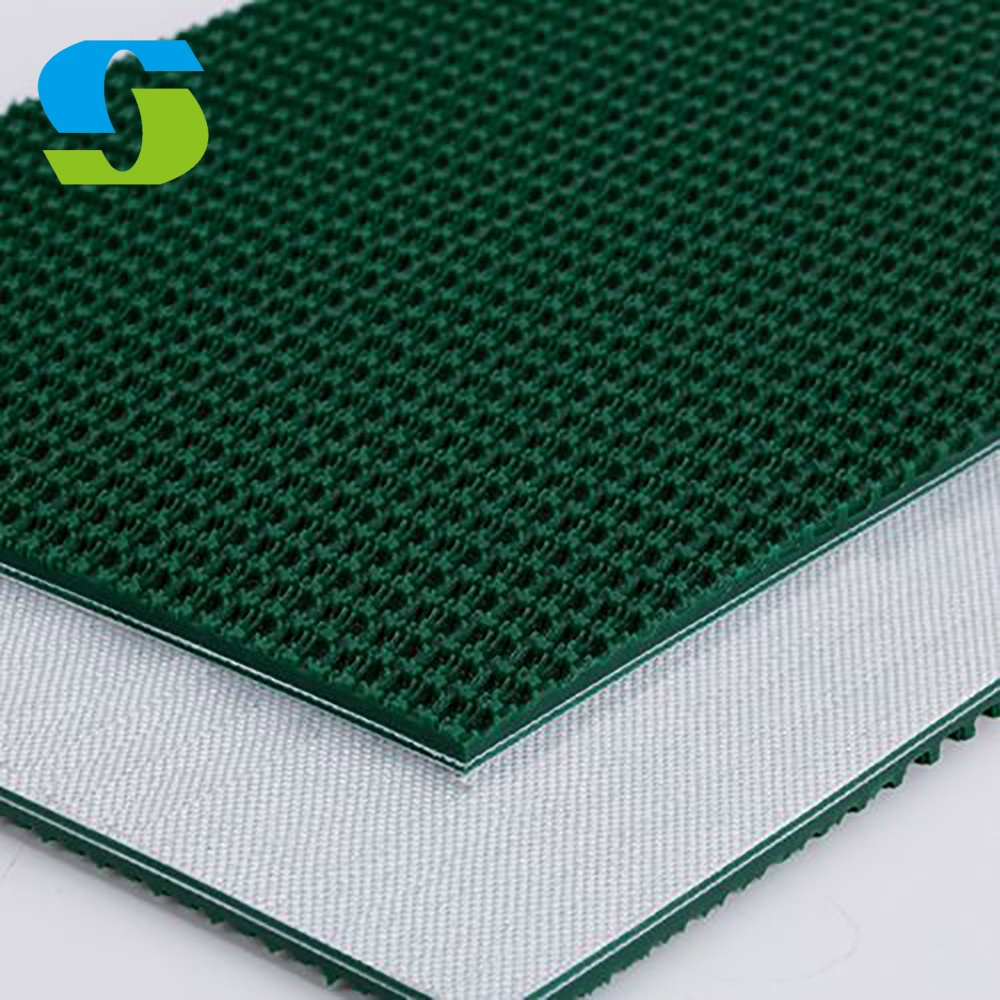
- Rough-top belts
- Cleated belts
- Sidewall belts
- Food-grade PVC belts
- Anti-static PVC belts
What Is a PVC Conveyor Belt Used For?
PVC conveyor belts are primarily used to transport materials, products, or packaged goods through production, processing, sorting, and packaging systems.
Their most common applications include:
- Food processing and food packaging
Food-grade PVC conveyor belts are extensively used in:
- Bakery production lines
- Fruit and vegetable processing
- Meat and poultry packaging
- Snack food manufacturing
- Beverage bottling plants
PVC belts used in food applications are designed to meet food contact compliance standards and offer smooth, easy-to-clean surfaces.
Why PVC works well here:
- Moisture resistance
- Hygienic cleanability
- Oil/fat resistance (in certain formulations)
- Anti-microbial surface options
- Logistics and parcel sorting systems
PVC conveyor belts are the standard choice for:
- Warehousing
- E-commerce fulfilment centres
- Airport baggage handling
- Courier sorting systems
- Automated parcel conveyors
Their flexibility and durability make them ideal for high-cycle transport environments.
- Packaging industry
Packaging facilities commonly use PVC conveyor belts for:
- Box transportation
- Product assembly lines
- Shrink-wrap systems
- Labeling lines
- Carton sealing conveyors
PVC’s stable friction properties improve movement consistency in automated packaging processes.
- Electronics manufacturing
In electronics assembly plants, anti-static PVC conveyor belts are used for:
- PCB assembly
- Semiconductor production
- Device packaging
- Precision component transfer
Anti-static PVC formulations help reduce the risk of electrostatic discharge.
- Agricultural processing
PVC conveyor belts support agricultural operations such as:
- Seed sorting
- Grain handling
- Produce washing lines
- Agricultural packaging systems
Their moisture and dirt resistance make them ideal for these demanding environments.
- Pharmaceutical and medical production
PVC conveyor systems are often found in:
- Tablet packaging
- Medical device assembly
- Sterile goods transport
- Pharmaceutical bottling lines
Smooth PVC surfaces support hygiene-focused production.
Key Advantages of PVC Conveyor Belts
- Cost-effective performance
PVC belts offer one of the best cost-to-performance ratios of all conveyor belt materials.
- Good chemical resistance
PVC resists many common substances, including acids, alkalis, cleaning agents, and industrial chemicals.
- Moisture and corrosion resistance
Unlike fabric-only belts, PVC-coated belts resist water absorption and environmental moisture damage.
- Highly customisable surface options
Manufacturers can produce PVC belts with:
- Matte finish
- Gloss finish
- Rough top texture
- Diamond pattern
- Cleats
- Tracking guides
- Easy fabrication and installation
PVC belts can be fabricated with:
- Finger splices
- Hot vulcanisation
- Sidewalls
- Cleats
- Sealed edges
Experienced manufacturers such as Wuxi Shun Sheng Industry provide custom fabrication for application-specific conveyor requirements.
Limitations of PVC Conveyor Belts
- Not ideal for high temperatures
Compared to materials like PTFE or silicone, PVC has limited heat resistance.
- Limited heavy-duty load capacity
For mining or transporting heavy materials in bulk, rubber belts are often more suitable.
- Not suitable for certain oils/solvents
Standard PVC can be degraded by aggressive oils and solvents over time.
PVC Conveyor Belt vs Other Conveyor Belt Materials
|
Belt Material |
Best For | Main Advantages | Main Limitations |
| General industrial/light-medium duty | Affordable, versatile, chemical-resistant | Limited heat resistance | |
| Food/high sanitation | Better cut/oil resistance |
Higher cost |
|
| Rubber Conveyor Belt | Heavy-duty bulk material | High load capacity |
Less hygienic |
| PTFE Belt | High-temperature processing | Heat resistant |
Expensive |
| Silicone Belt | Specialized food/heat uses | Excellent release properties |
Higher cost |
How to Choose the Right PVC Conveyor Belt?
Selecting the proper PVC conveyor belt requires evaluating:
- Belt Thickness
Typical range:
- 1–2 mm for lightweight transport
- 3–5 mm for medium-duty systems
- 5+ mm for specialized applications
- Surface Texture
|
Surface Type |
Best Application |
|
Smooth |
Packaging / General transport |
|
Rough Top |
Inclined conveying |
| Diamond Pattern |
Grip-intensive transport |
| Cleated |
Bulk item incline transfer |
- Food-Grade vs Industrial Grade
Food processing requires certified food-grade PVC formulations.
- Anti-Static Requirement
Essential for electronics and semiconductor applications.
Manufacturing Process of PVC Conveyor Belts
The production of PVC conveyor belts is a controlled manufacturing process designed to ensure consistent strength, flexibility, resistance to wear, and performance tailored to specific applications. High-quality belts require precise material formulation and rigorous process control at every stage.
- Raw material preparation
Manufacturers formulate the PVC compound based on the desired performance requirements.
Typical components:
- PVC resin
- Plasticisers
- Stabilisers
- Fillers
- Pigments
- Functional additives (anti-static, flame retardant, food-grade modifiers, etc.)
- Fabric reinforcement preparation
The tensile core is prepared to provide structural strength.
Common reinforcement materials:
- Polyester fabric
- Cotton fabric
- Polyester/cotton blends
- Multi-ply woven carcass materials
- PVC coating/impregnation
A PVC compound is applied to the reinforcement layer through coating or impregnation processes.
The purpose of this is to bond the PVC to the fabric core, improve flexibility and durability, and build the base belt structure.
- Lamination and layer building
Multiple layers are laminated together as required.
May include:
- Top cover layer
- Reinforcement plies
- Bottom cover layer
- Special surface textures/patterns
- Calendering/pressing
The belt passes through calendering rollers or heated presses to:
- Achieve uniform thickness
- Improve layer bonding
- Control surface finish
- Cooling and stabilisation
Controlled cooling ensures dimensional stability and prevents deformation.
- Surface processing/patterning
Optional surface treatments are added for specific applications.
Examples:
- Rough-top finish
- Diamond/patterned textures
- Matte/glossy finish
- Sidewall/cleat attachment
- Slitting, cutting, and fabrication
Belts are cut to width and fabricated into their final sizes.
- Quality inspection
Final quality control (QC) checks include:
- Thickness tolerance
- Tensile strength
- Adhesion strength
- Surface quality
- Dimensional consistency
Emerging PVC Conveyor Belt Trends in 2026
The PVC conveyor belt industry in 2026 is evolving toward higher performance, sustainability, and application specialization.
- Eco-Friendly PVC Formulations
Reduced environmental-impact plasticizers
Development of recyclable / lower-emission compounds
- Food-Grade and Hygienic Belt Demand Growth
Increased demand for FDA/EU-compliant belts
More antimicrobial and easy-clean surfaces
- Higher-Performance Lightweight Belts
Thinner belts with improved tensile strength
Lower energy consumption in conveyor systems
- Smart / Sensor-Integrated Conveyor Solutions
Growth of predictive maintenance and Industry 4.0 integration
Belt systems incorporating wear-monitoring technologies
- Custom Surface Engineering
More application-specific textures and friction surfaces
Industry-tailored grip/transport solutions
- Greater Heat / Chemical Resistance Development
Improved PVC compounds for harsher industrial environments
FAQ About PVC Conveyor Belt
What industries use PVC conveyor belts the most?
PVC conveyor belts are widely used in food processing, packaging, logistics, warehousing, agriculture, pharmaceuticals, and electronics manufacturing.
Is a PVC conveyor belt food safe?
Food-grade PVC conveyor belts can be food safe when manufactured to meet applicable compliance standards.
Can PVC conveyor belts handle oil?
Some oil-resistant PVC belts can, but standard PVC has limited resistance to aggressive oils.
How long does a PVC conveyor belt last?
Depending on usage and maintenance, high-quality PVC conveyor belts typically last several years.
What is the difference between PVC and PU conveyor belts?
PVC belts are generally more affordable and versatile, while PU belts offer better cut resistance and food/oil performance.
Conclusion
PVC conveyor belts are used across a wide range of industries thanks to their exceptional balance of durability, affordability, hygiene, flexibility, and customisation. From food packaging lines to automated logistics systems, they remain one of the most practical solutions for light- and medium-duty industrial transport.
Selecting the appropriate belt construction, surface type, and manufacturer is essential for optimising conveyor performance. Businesses seeking reliable industrial belting solutions can benefit from the customisation services offered by experienced suppliers such as Wuxi Shun Sheng Industry, which can provide application-specific PVC conveyor belts to meet modern production requirements.