Airport baggage handling is a critical aspect of modern air travel. Millions of bags pass through conveyor systems daily, and ensuring their safe, efficient, and timely transport is paramount for operational efficiency and passenger satisfaction. Among the technologies that make this possible, PVC wavy rough top belts have emerged as one of the most effective and reliable solutions. Combining durability, flexibility, and anti-slip performance, these belts are specifically engineered to meet the stringent requirements of airport operations.
This article explores why PVC wavy rough top belts are ideal for airport baggage handling, examining their design, materials, performance characteristics, and applications in modern airport systems.
Overview of Airport Conveyor Systems
Modern airports rely heavily on automated conveyor systems to manage passenger luggage. These systems must handle high volumes of baggage, sometimes under tight time constraints. Key requirements for airport conveyor belts include:
-
High durability to withstand continuous operation and heavy loads.
-
Anti-slip surfaces to prevent luggage from sliding, tipping, or colliding.
-
Resistance to environmental factors such as moisture, oils, and temperature variations.
-
Ease of maintenance to minimize downtime and reduce operational costs.
Traditional flat conveyor belts often fail to meet all these requirements, especially in sections with inclines, curves, or areas where luggage needs to remain stationary during transport. This is where wavy, rough top belts provide a clear advantage.
What is a PVC Wavy Rough Top Belt?
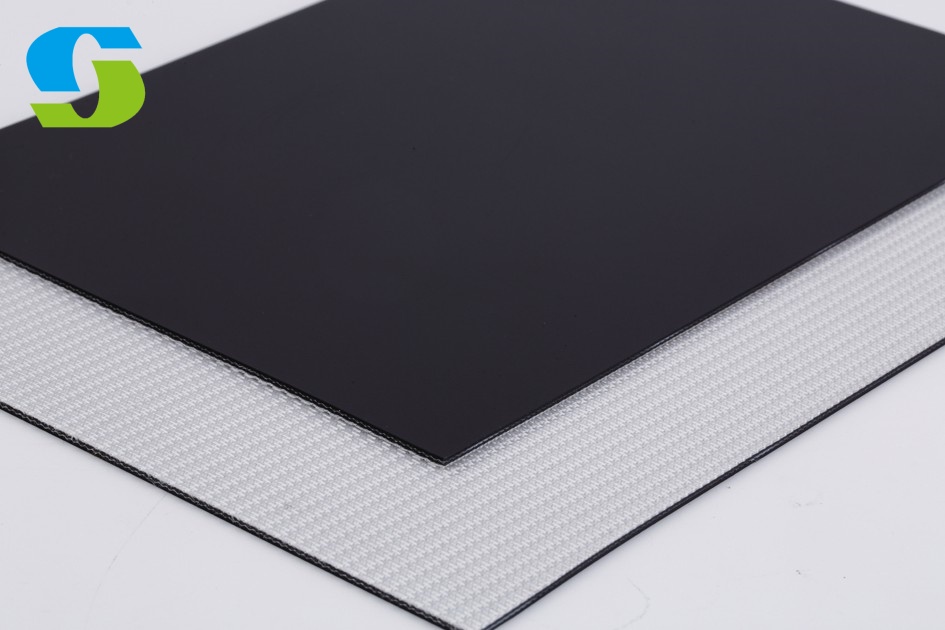
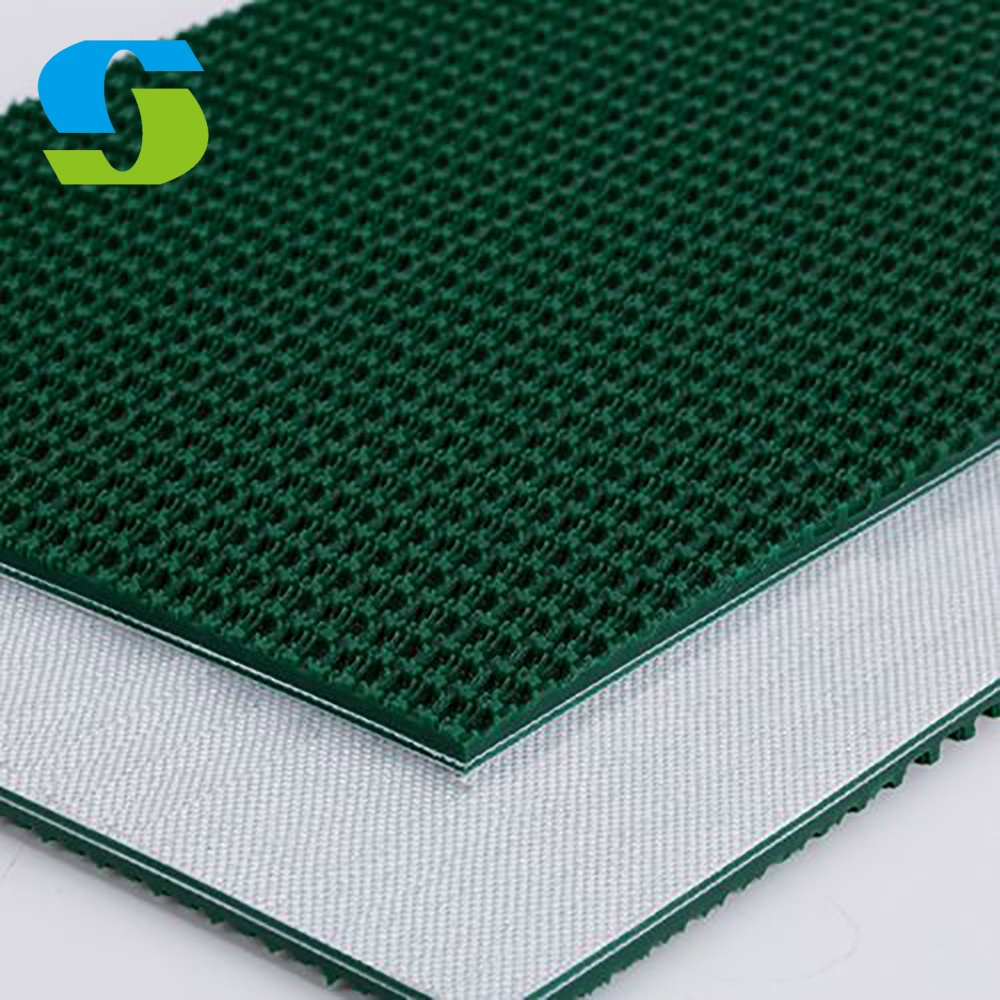
A PVC wavy rough top belt is a type of conveyor belt made from polyvinyl chloride (PVC) material, featuring a wavy or corrugated surface with a rough texture. The combination of the material and surface design offers several key benefits:
-
PVC Material: Known for its flexibility, durability, and resistance to wear, PVC is ideal for applications where the belt experiences continuous motion and variable loads.
-
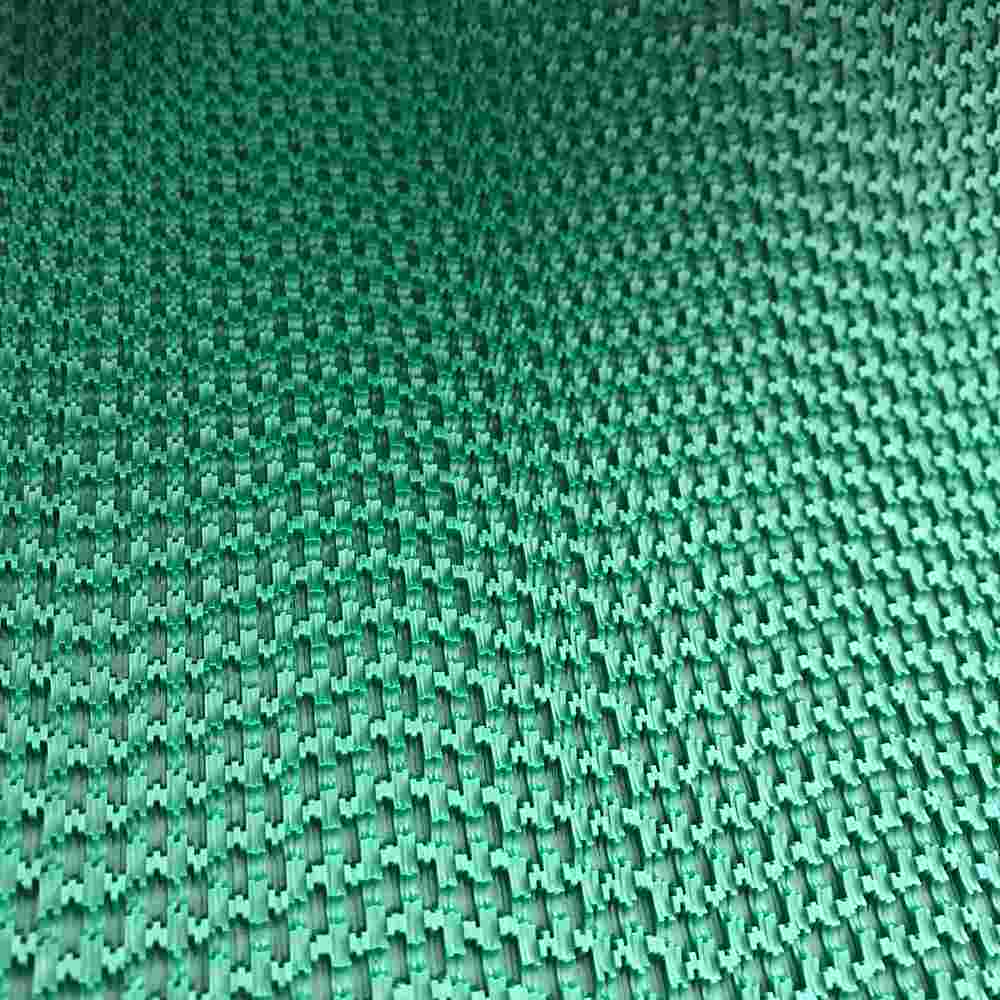
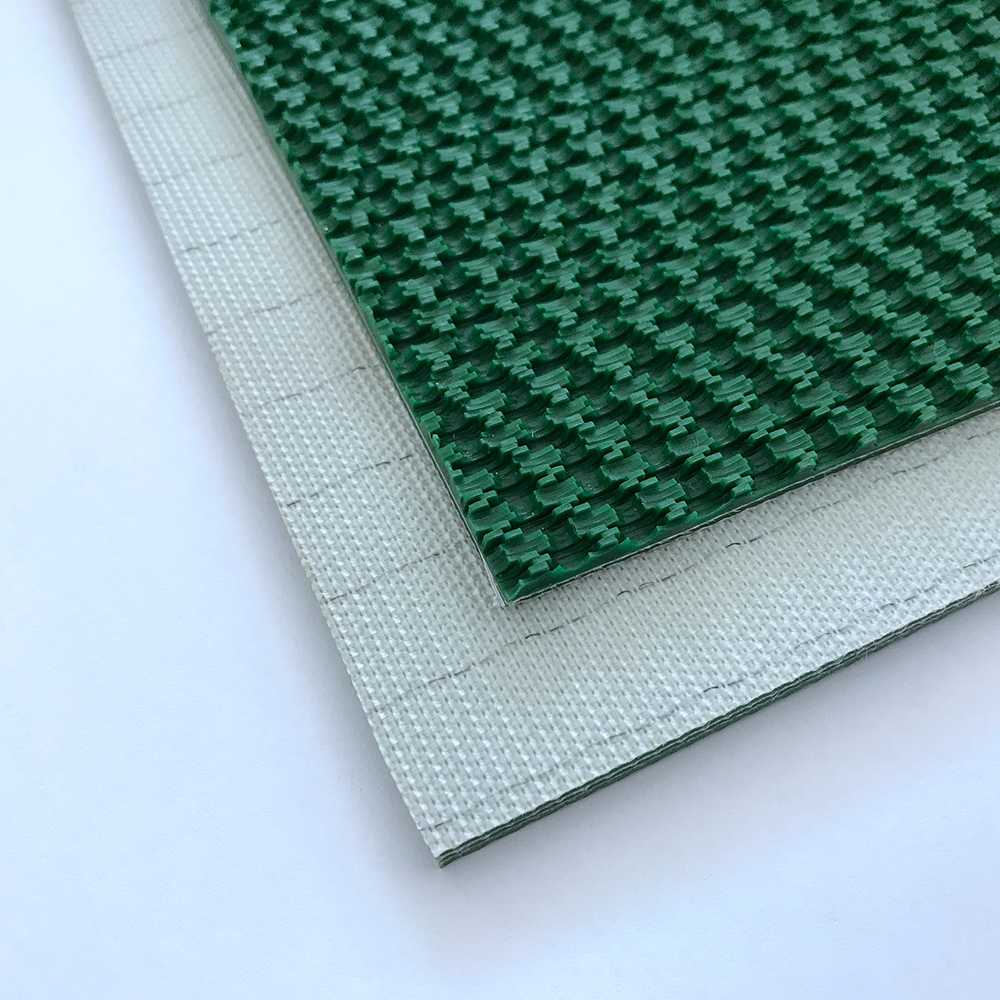
Wavy Rough Top Surface: The wavy pattern increases surface friction, reducing the likelihood of luggage slipping or sliding. The rough texture further enhances grip, particularly for smooth or lightweight items.
These belts are available in a variety of specifications, including different widths, thicknesses, and wavy heights, allowing airports to customize them according to the system’s requirements.
Material Advantages of PVC
PVC, or polyvinyl chloride, is a versatile synthetic polymer widely used in industrial applications. For airport conveyor belts, its advantages include:
-
Durability: PVC belts can withstand continuous operation without significant wear, even under heavy luggage loads.
-
Flexibility: The material can bend around pulleys and navigate curves without cracking or losing structural integrity.
-
Water and Oil Resistance: Airports often encounter moisture or spilled liquids. PVC belts resist damage from these substances, maintaining functionality.
-
Temperature Tolerance: PVC remains stable across a range of temperatures, ensuring reliable operation in different airport environments.
-
Low Maintenance: Its resistance to abrasion and chemical attack reduces maintenance frequency, leading to lower operational costs.
These characteristics make PVC a preferred material for airport conveyor systems, particularly when paired with the wavy rough top design for enhanced performance.
Importance of Wavy Rough Top Design
The wavy, rough top design is not just aesthetic—it is functional and crucial for airport operations. The design provides:
-
Enhanced Grip: The corrugated waves and rough surface create multiple contact points with baggage, preventing slippage even on inclined conveyor sections.
-
Improved Control: Bags remain aligned, reducing collisions and jams within the conveyor system.
-
Versatility: Suitable for various types of luggage, from small carry-ons to large checked bags.
-
Adaptability: Can be used on flat, inclined, or declined sections, accommodating different airport conveyor layouts.
Without this specialized design, traditional flat belts often struggle with items that have smooth bottoms or irregular shapes, leading to increased baggage damage or operational inefficiency.
Applications in Airport Baggage Handling
Check-In Conveyor Systems
At check-in counters, baggage is transferred from counters to the primary conveyor lines. Wavy, rough top belts help:
-
Maintain bag alignment during loading.
-
Prevent slipping of smaller or lightweight bags.
-
Reduce jams, ensuring smooth flow into the sorting system.
Sorting Systems
Airport sorting systems handle large volumes of luggage, directing bags to appropriate gates or destinations. PVC wavy rough top belts are ideal for:
-
Inclined sorters: Preventing sliding during upward or downward movement.
-
Diverging chutes: Guiding baggage efficiently without tipping or collision.
-
High-speed conveyors: Maintaining control at faster belt speeds.
Baggage Claim Areas
At arrival terminals, smooth operation and safety are crucial. Wavy rough top belts:
-
Ensure luggage stays stationary during slow conveyor movement.
-
Reduce the risk of tipping or scratching.
-
Improve passenger experience by delivering bags intact.
Ramp and Loading Applications
In cargo handling and loading, PVC wavy rough top belts:
-
Provide friction for heavy-duty luggage and cargo boxes.
-
Allow safe incline movement, preventing sliding accidents.
-
Support integration with other materials handling equipment, including automated lifts and rollers.
Performance Characteristics
Anti-Slip Properties
The primary advantage of wavy rough top belts is enhanced friction. Tests show these belts can reduce baggage slippage by up to 90% compared to flat PVC belts, particularly on inclines or during sudden stops.
Wear Resistance
PVC belts exhibit high abrasion resistance, making them suitable for continuous operation over years without significant degradation.
Chemical Resistance
Airports often require belts to resist cleaning agents, oils, and moisture. PVC belts maintain integrity even under repeated exposure to these substances.
Load Capacity
Depending on thickness and wavy height, these belts can handle:
-
Small to medium baggage: up to 50–70 kg per item.
-
Heavy cargo: customized high-thickness belts can support 100+ kg per item.
Maintenance and Longevity
Wavy, rough top PVC belts are easy to clean using water or mild detergents. Their durability allows them to remain operational for several years with minimal maintenance.
Technical Specifications
Typical specifications for PVC wavy rough top belts used in airport applications include:
-
Width: 300 mm – 2000 mm (customizable)
-
Thickness: 3 mm – 12 mm
-
Wave Height: 1 mm – 5 mm
-
Material: PVC with embedded reinforcement fibers for strength
-
Surface Finish: Rough top / wavy design for anti-slip performance
Belt selection depends on conveyor speed, incline, baggage type, and environmental conditions.
Advantages Over Alternative Belts
Compared with rubber belts or flat PVC belts, PVC wavy rough top belts offer:
-
Superior anti-slip performance for inclined or curved conveyors.
-
Lighter weight, reducing motor load and energy consumption.
-
Resistance to environmental factors, such as UV light, moisture, and chemicals.
-
Customization flexibility, including width, thickness, and wave profile.
-
Long-term cost-effectiveness due to lower maintenance and extended service life.
Installation and Integration
Proper installation ensures optimal performance:
-
Align pulleys accurately to prevent lateral movement.
-
Tension the belt correctly to avoid slippage or premature wear.
-
Regularly inspect the surface and waves for debris accumulation.
-
Lubricate pulleys as needed to reduce friction without compromising grip.
Integration with airport baggage handling systems is straightforward, as PVC wavy rough top belts are compatible with existing rollers, guides, and chutes.
Case Studies and Industry Applications
- International Airports
Many large airports globally have adopted PVC wavy rough top belts in high-volume conveyor systems. These belts handle thousands of bags per hour, reducing delays and damage. - Low-Cost Carriers
Airports serving budget airlines benefit from these belts due to low maintenance costs and high reliability, ensuring continuous operations with minimal staffing. - Automated Sorting Centers
Automated baggage sorters rely on wavy rough top belts for precise alignment and anti-slip performance, supporting AI-based scanning and sorting technologies.
Future Developments
The future of airport conveyor belts includes:
-
Eco-friendly PVC formulations with recycled materials.
-
Smart belts with embedded sensors for monitoring wear, speed, and tension.
-
Enhanced wave patterns optimized through simulation for maximum grip and efficiency.
-
Integration with automated baggage tracking to improve operational analytics.
PVC wavy rough top belts are essential components of modern airport baggage handling systems. Their combination of durability, flexibility, anti-slip performance, and low maintenance makes them ideal for the high demands of airports worldwide.