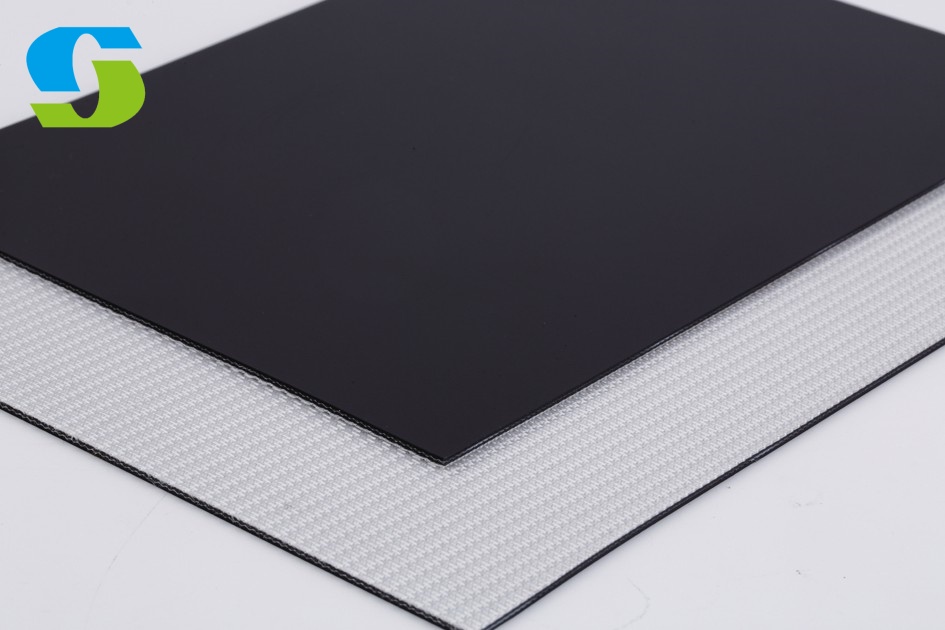
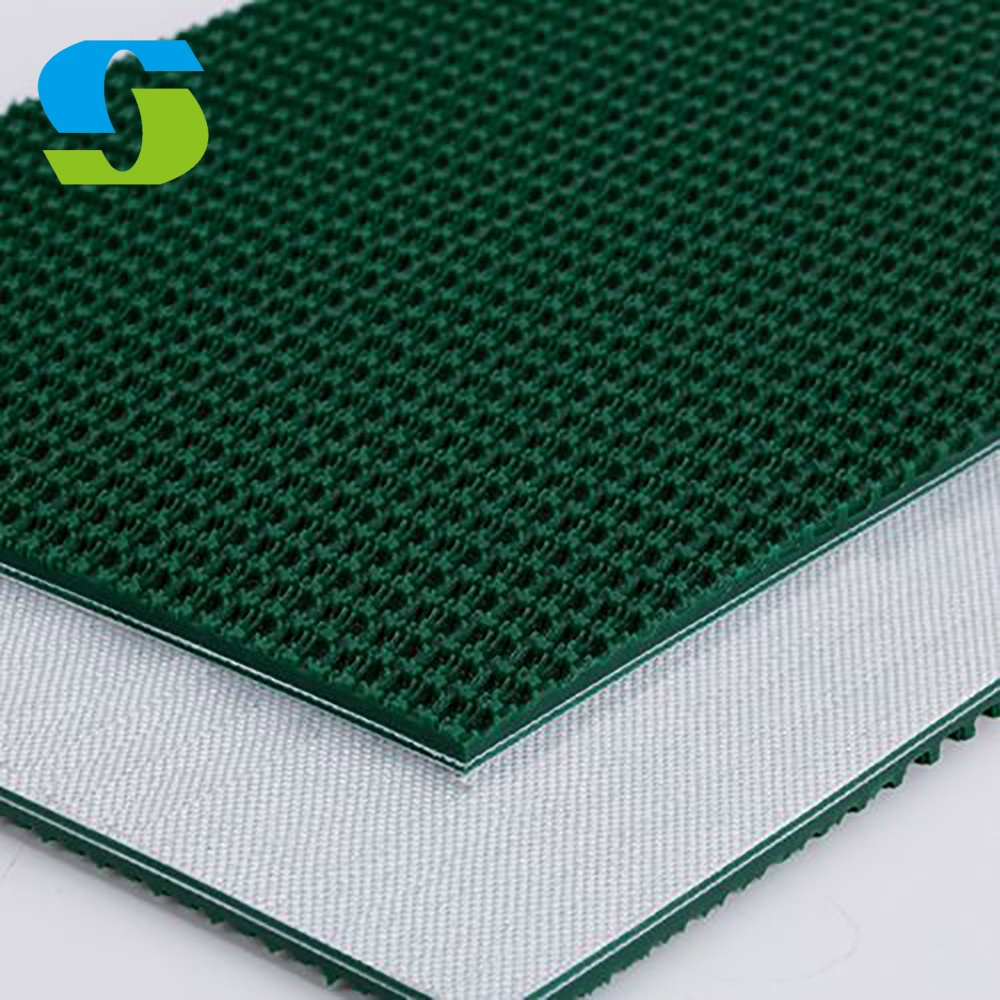
In modern food processing, efficiency and cleanliness go hand in hand. The interplay between productivity, safety of the food being processed, and resilience has brought about great strides in the technology of conveyor belts. Homogenous TPU conveyor belt is one such innovation that has quickly become the foundation of safe, clean, and efficient material handling where uncompromising levels of cleanliness together with reliability are required—for example, in the meat and pet food industries.
Homogenous Belts: The Foundation of Food-Safe Conveying
Homogeneous conveyor belts refer to belts that are made from one single solid piece of thermoplastic material-most typically either TPU (thermoplastic polyurethane) or TPE (thermoplastic elastomer). Normal fabric-reinforced belts do not have several layers of material bonded together, as in the case with homogeneous belts. Rather, they are seamless, non-porous, and fully solid.
It gets rid of cracks, levels, and strength added by fiber, where dirt, wetness, or germs could sit. The outcome is a belt that stays clean by nature, is easy to wash, and is less likely for microbes to grow on it. In places where cleaning rules are very strict, like with HACCP, FDA, or EU 1935/2004 laws, solid belts are better than normal conveyor materials.
In the meat and pet food sectors, where there is handling of raw proteins, fats, oils, and moisture on a day-to-day basis, the use of homogenous belts has become not just optional but rather an act of best practice.
Evolution of Conveyor Belts in Food Processing
From Fabric Belts to Hygienic Innovation
The first generation of belts being used in food processing applications was often made up of fabric-reinforced PVC or rubber composites. Though they offered a fair amount of strength, sanitization was close to impossible since these belts would easily delaminate and break down very quickly when subjected to cleaning chemicals and high temperatures.
By the 1990s, modular plastic belts became a common sight. They offered better sanitation and flexibility, but since their interlocking links presented gaps and hinges where bacteria could sit, this would be a problem in meat and pet food environments, where residue and moisture are always kept indoors on the belts.
The move to homogeneous TPU belts was seen as the next big thing. By developing a monolithic surface that is also non-porous, hidden points of contamination were eliminated, thereby reducing cleaning time, increasing hygiene, and service life.
Why TPU? The Science Behind the Material
Thermoplastic polyurethane (TPU) is a versatile polymer that bridges the gap between rubber and plastic. It combines the elasticity and flexibility of rubber with the durability, chemical resistance, and processability of plastic.
Key properties of TPU that make it ideal for food industry conveyor belts include:
-
Wear and abrasion resistance: TPU withstands friction from both conveyed products and mechanical components.
-
Temperature stability: It maintains mechanical integrity across a broad temperature range, typically from -30°C to +100°C.
-
Chemical resistance: Resists fats, oils, cleaning agents, and animal byproducts common in meat processing.
-
Flexibility: Allows easy installation and reliable tracking around pulleys and conveyors.
-
Recyclability: TPU is thermoplastic, meaning it can be melted and reshaped, aligning with modern sustainability initiatives.
By using food-grade TPU, homogenous belts comply with FDA, EC, and USDA food contact regulations, ensuring full safety for both human and animal food production.
Structure and Design of the Homogeneous TPU Conveyor Belt
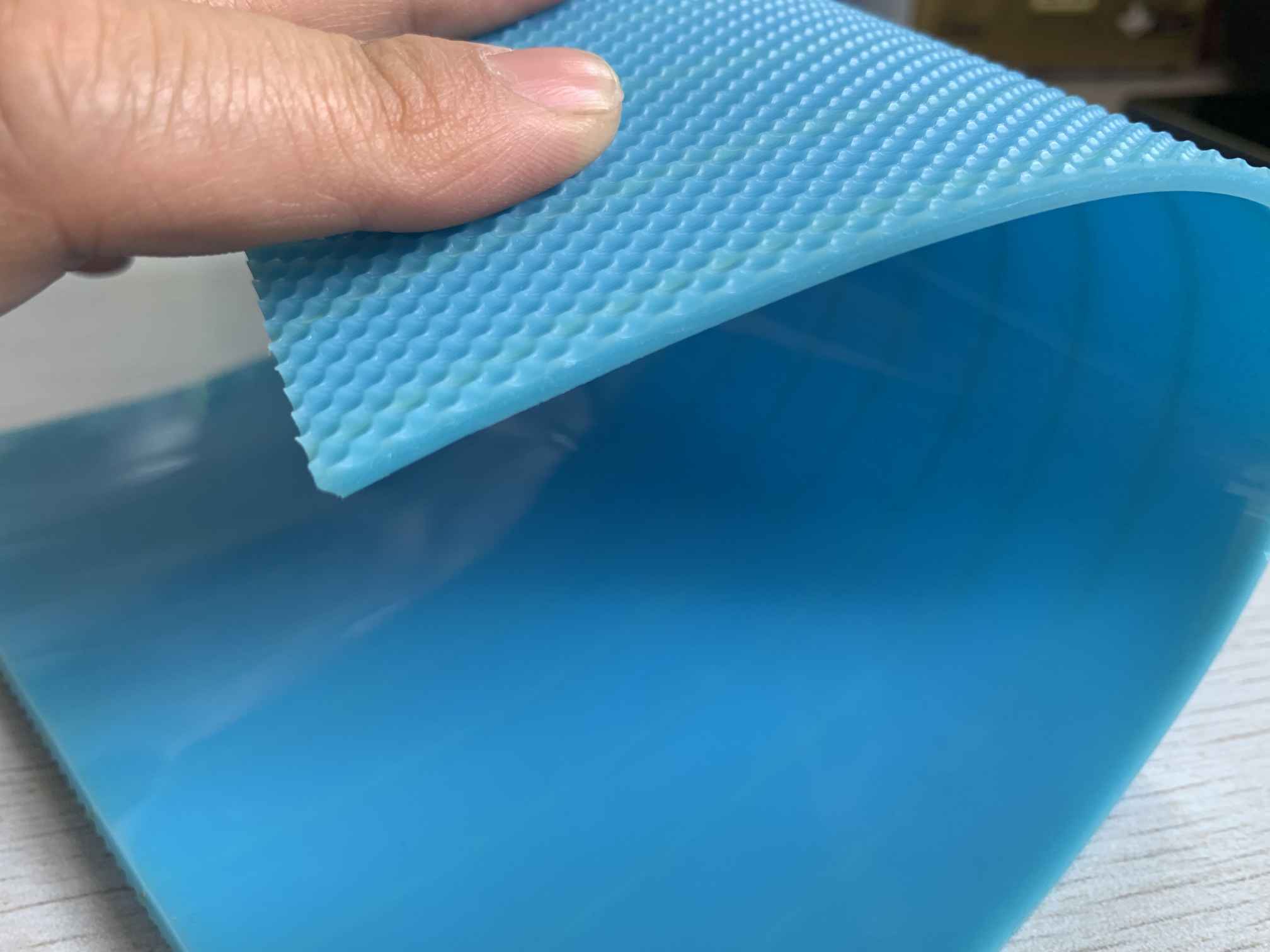
The homogenous TPU conveyor belt for the meat and pet food industry features a uniform structure from top to bottom. Unlike fabric-reinforced belts, it has no woven layers—meaning the tensile strength and flexibility come entirely from the TPU compound itself.
Structural Features
-
Solid monolithic construction: Eliminates cracks, crevices, or delamination points.
-
Smooth, flat surface: Minimizes product residue and makes cleaning efficient.
-
Optional textured finishes: Available for applications requiring grip or drainage.
-
Thermoweldable edges and joints: Enable endless splicing, creating a seamless belt loop that maintains hygiene integrity.
-
Reinforced drive areas (optional): For high-load zones, TPU density can be locally increased without compromising flexibility.
Mechanical Performance
Homogeneous TPU belts provide excellent tensile and elongation properties, ensuring they can handle heavy loads and high-speed conveying without deformation or tracking issues. They also maintain a consistent coefficient of friction, which is crucial for steady product transport even in wet or oily environments.
Hygiene and Food Safety Advantages
In the meat and pet food industries, hygiene is not negotiable. Bacterial contamination can lead to product recalls, reputational damage, and financial loss. The homogenous TPU conveyor belt directly addresses these risks through its material and design characteristics.
Key Hygiene Benefits
-
No Layer Separation: Traditional belts delaminate under moisture and heat, creating hidden bacteria traps. Homogeneous belts eliminate this problem.
-
Non-porous Surface: Liquids and residues cannot penetrate, ensuring full cleanability.
-
Quick and Effective Cleaning: Smooth surfaces allow easy washing with hot water, steam, or approved cleaning agents.
-
Resistance to Cleaning Chemicals: TPU remains stable under exposure to alkaline or acidic cleaners.
-
Compliance with Food Safety Regulations: Fully meets international standards for direct food contact.
Reducing Downtime and Water Consumption
Cleaning traditional belts can account for up to 40% of total operational downtime in food plants. Homogenous belts drastically reduce cleaning time—sometimes by half—while also requiring less water and detergent. This not only improves efficiency but also supports sustainability and cost reduction initiatives in modern processing facilities.
Performance in the Meat and Pet Food Industries
The Homogenous TPU Conveyor Belt for Meat and Pet Food Industry is engineered to meet the harsh demands of daily production, where belts are exposed to blood, fat, bones, salt, and fluctuating temperatures.
Let’s examine how these belts perform across key processing stages:
Meat Processing Applications
-
Cutting and trimming lines: The smooth TPU surface resists knife cuts and abrasion from metal tools.
-
Sorting and inspection: Belts maintain consistent speed and product positioning, improving automation accuracy.
-
Cooking, smoking, or chilling: TPU belts tolerate thermal cycles without deformation.
-
Packaging: Their non-stick surface prevents product adhesion, ensuring clean transfer to trays or vacuum packs.
Pet Food Processing Applications
-
Raw ingredient transport: Handles sticky or greasy raw materials efficiently.
-
Mixing and forming sections: Oil-resistant properties prevent material build-up.
-
Extrusion and drying: TPU withstands high temperature and continuous operation.
-
Final packaging and sealing: Smooth surface supports hygienic transfer and easy cleaning between batches.
These belts deliver consistent performance even under 24-hour continuous operation, maintaining strength, shape, and sanitation standards over time.
Mechanical and Physical Properties
| Property | Description |
|---|---|
| Material | Food-grade thermoplastic polyurethane (TPU) |
| Structure | Monolithic, non-reinforced homogeneous design |
| Temperature Range | -30°C to +100°C continuous |
| Surface Finish | Smooth, glossy, or matte (customizable) |
| Tensile Strength | High; suitable for heavy-duty loads |
| Oil/Fat Resistance | Excellent |
| Cleaning Resistance | Outstanding against alkaline and acidic solutions |
| Hygienic Standard | FDA, EU 10/2011, and HACCP compliant |
This table summarizes why homogenous TPU belts outperform conventional solutions in demanding industrial conditions.
Customization and Design Flexibility
Every processing plant operates differently. That’s why customization is one of the greatest strengths of homogenous TPU conveyor belts.
Manufacturers can tailor belts according to:
-
Color: Blue and white are most common for food safety (easy to identify contaminants).
-
Thickness: Typically 1.5–5 mm, depending on load and pulley diameter.
-
Width and Length: Fully customizable for new or retrofit systems.
-
Edge Sealing: Can be thermally sealed or fitted with sidewalls to prevent spillage.
-
Embossed Surfaces: Available for inclined transport or wet environments.
These customization options make homogenous TPU belts adaptable to nearly any processing environment—from small pet food facilities to large-scale slaughterhouses.
Installation and Splicing Techniques
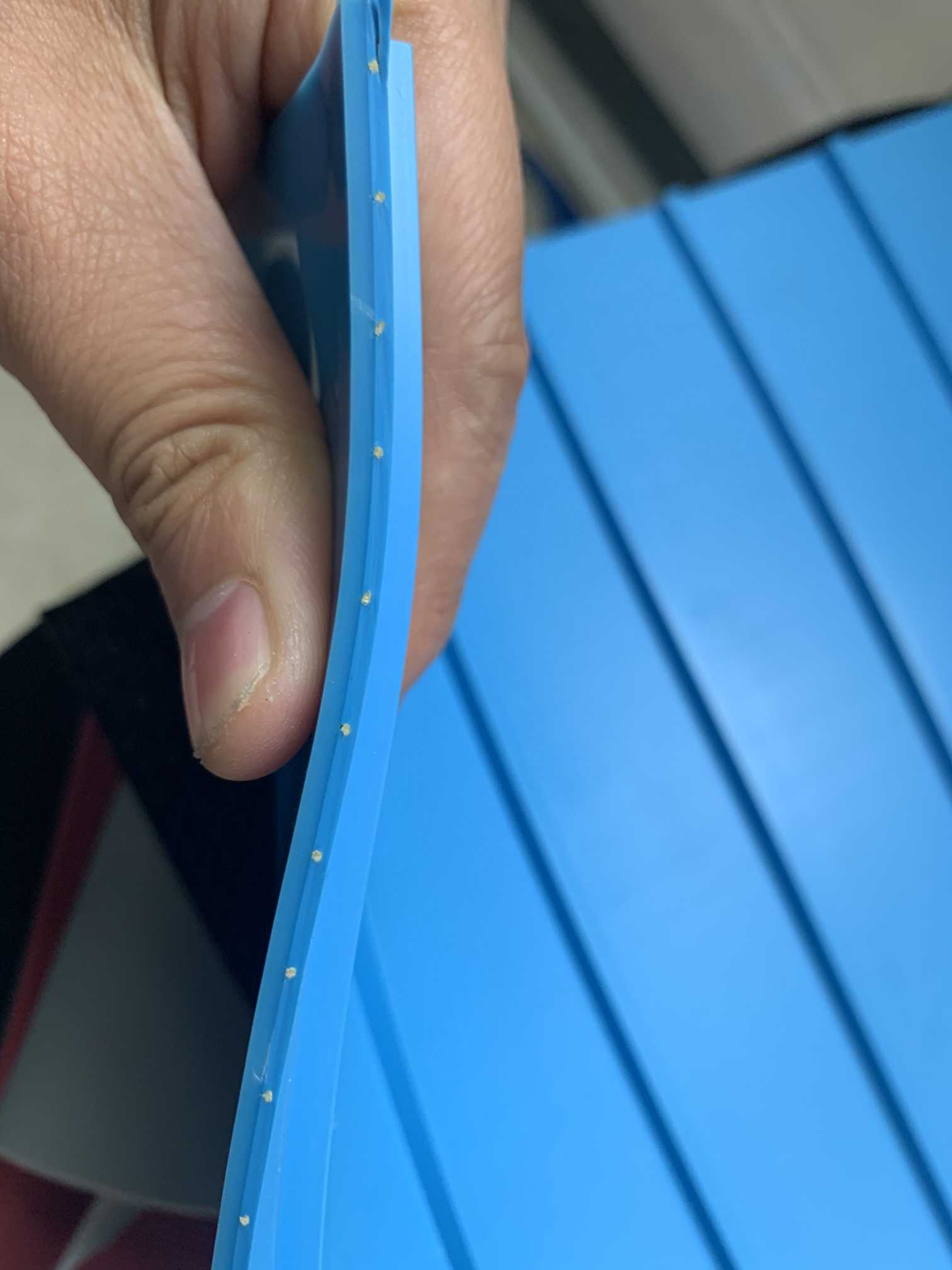
Homogenous TPU belts can be endlessly welded, forming a seamless joint that matches the belt’s tensile strength and hygiene standards. Two main methods are used:
-
Thermofusion Welding: Melts belt ends and fuses them for a smooth, continuous surface.
-
Mechanical Fasteners (temporary): Used for quick replacement or maintenance, but less hygienic than welding.
Proper alignment, tensioning, and cleaning protocols during installation ensure long service life and optimal tracking.
Maintenance and Cleaning Practices
While TPU belts are inherently easy to maintain, consistent cleaning and inspection routines ensure maximum performance.
Recommended practices include:
-
Routine visual inspection for cuts, cracks, or misalignment.
-
Regular washing with warm water and mild detergent after production shifts.
-
Periodic disinfection using approved food-grade sanitizers.
-
Avoid excessive mechanical scraping to prolong belt surface life.
When maintained properly, a homogenous TPU belt can last 3–5 years or longer, depending on load and operating conditions.
Comparison with Other Conveyor Belt Types
| Type | Hygiene | Durability | Maintenance | Cost | Ideal Use |
|---|---|---|---|---|---|
| Fabric-reinforced PVC Belt | Low | Moderate | High | Low | Dry goods, low-risk food |
| Modular Plastic Belt | Medium | High | Medium | Medium | Packaged or dry products |
| Homogenous TPU Belt | High | High | Low | Medium-High | Meat, seafood, pet food, dairy |
The comparison clearly shows that homogenous TPU belts strike the best balance between hygiene, strength, and lifecycle cost for critical food-handling applications.
Environmental and Sustainability Impact
As the food industry moves towards green manufacturing, the recyclability of TPU becomes more and more significant. Unlike thermoset rubbers, it is possible to reprocess and reuse TPU.
Reducing water and chemicals used in cleaning homogenous belts further reduces the carbon footprint as well as resource conservation. Most manufacturers work under ISO 14001 environmental management systems that reinforce sustainability all over the supply chain.
Global Adoption and Industry Standards
Today, major food-processing companies and equipment integrators worldwide—especially in Europe, North America, and Asia-Pacific—are transitioning to homogenous TPU belts.
Compliance with major certifications, including:
-
FDA (21 CFR 177.1680)
-
EU 10/2011 Regulation
-
REACH and RoHS
-
NSF/ANSI/3-A standards
ensures that these belts can be universally applied in global supply chains without risk of regulatory conflict.
Future Developments in Homogenous Belt Technology
Innovation in conveyor belt engineering continues to evolve. Current research focuses on:
-
Antimicrobial TPU compounds that inhibit bacterial growth directly on the belt surface.
-
Smart monitoring systems that detect wear, temperature, and contamination in real time.
-
Energy-efficient belt textures that reduce friction losses and power consumption.
-
Biobased TPU materials derived from renewable sources.
These developments indicate that the future of homogenous belts will be even cleaner, smarter, and more sustainable.
Economic Advantages and ROI
While the initial investment in homogenous TPU belts may be higher than conventional belts, the total cost of ownership is significantly lower due to:
-
Reduced cleaning time and resources
-
Longer operational lifespan
-
Fewer product recalls due to contamination
-
Lower maintenance costs
-
Improved uptime and productivity
The Homogenous TPU Conveyor Belt for the Meat and Pet Food Industry is, in essence, an important step forward in hygienic material handling. It offers not only food-grade safety but also high mechanical strength with unequaled cleanability, supporting efficiency, sustainability, and regulatory compliance that the industry progressively demands.
With homogeneous TPU belts, manufacturers safeguard product integrity as well as seamless operation, reducing maintenance expenses while building up consumer confidence. As food processing develops its automation and enhances hygiene practices, the technology of homogenous TPU conveyor belts will be a hallmark—clean production, efficient production, production ready for the future.