Article Summary:
Selecting between polyurethane (PU) and Bandes transporteuses en PVC is common, but it’s also critical in the material handling, food processing, packaging, logistics, and manufacturing industries.
While both materials are commonly employed and frequently compared directly, their properties regarding performance, compliance, mechanical behavior, and cost of life differ significantly.
According to the Engineering Plastics Handbook and the ISO 21183 standards for conveyor belts, the selection of material should not only be based on price, but also on hygiene concerns, chemical resistance, operating temperature, and mechanical stress.
This article provides a comprehensive, industry-oriented analysis of the differences between PU and PVC conveyor systems, combining the fundamental principles of engineering, the application data from real-world situations, and the considerations of procurement.
Introduction: Why PU vs PVC Conveyor Belts Is a Critical Industry Question?
Belts that convey things aren’t passive components. They have a direct effect on the efficiency of production, hygienic compliance, risk of downtime, and overall cost of operation. Among lightweight belts that convey, the PU and PVC varieties of conveyor belts are the most popular, but they are often misinterpreted as being interchangeable.
In practice, the distinction between the two types of conveyor belt materials, PU and PVC, is based on the:
- Whether or not a system adheres to safety regulations regarding food.
- The quality of the oil-resisting ability, fats, and chemicals, etc.
- The performance of the device under constant mechanical pressure
- Constant frequency of maintenance and the number of cycles it takes to replace.
Understanding the genuine differences between these two materials is crucial to engineers, plant managers, OEMs, and purchasing teams.
What Is a PVC Conveyor Belt?
A PVC conveyor belt is composed of polyvinyl chloride as the primary material or coating, typically augmented with polyester or fabric to enhance its tensile strength. PVC belts are renowned for their versatility, cost, and widespread commercialization.
The primary attributes of PVC conveyor belts are
The conveyor belt for PVC offers a balanced combination of mechanical efficiency and economic value. They’re commonly employed in general-purpose transportation where the need for extreme hygiene or temperature resistance is not significant.
Core attributes include:
- Moderate abrasion resistance
- Good thermal conductivity at the typical operating temperature
- Moisture and mild chemical resistance
- Competitive price and performance ratio
Because of these attributes, PVC conveyor belts are typically found in logistics centers, packaging machines, and light manufacturing facilities.
What Is a PU Conveyor Belt?
PU conveyor belts are composed of thermoplastic polyurethane, a material that is well-known for its exceptional stretchiness, hygiene, and chemical resistance. PU belts are commonly employed in food, pharmaceutical, and hygienic applications.
The most common attributes of PU conveyor belts are
PU belts are typically associated with:
- superior capacity to withstand oils, fats, and grease
- Smooth, non-porous floors
- High resilience and stretchiness
- Violation of rigorous food safety regulations
These attributes make PU belts particularly suited for applications that require safety and sanitation.
Material Composition and Structural Differences
The primary difference between PU and PVC conveyor belts is the chemistry of the polymer and the molecular structure.
PVC is a polymer derived from vinyl that is flexible through plasticizers. Eventually, these plasticizers will migrate, which may adversely affect the flexibility of the belt and the integrity of the surface. PU, however, is an elastomer that lacks flexibility, which means it doesn’t require additional plasticizers to become flexible.
This distinction is responsible for the fact that PU belts typically have a longer consistency of performance, while PVC belts may become stiffer over time in environments that have a high demand.
Mechanical Performance Comparison
- Tensile strength and capacity to load
PU belts that convey products typically have a higher stretchiness and a better chance of recovery. This increases their effectiveness for systems that have a high degree of startup and stoppage cycles or a higher dynamic load.
PVC conveyor belts have a successful performance in steady conditions, but they may have higher wear in the presence of high mechanical stress or sharp pulley changes.
- Flexibility and Track ability
PVC conveyor belts have a high degree of flexibility in typical environmental conditions, which supports consistent tracking over long distances. However, at lower temperatures, PVC may have a quicker loss of flexibility than PU.
PU belts have a wider temperature range that is maintained, which contributes to the consistent tracking of cold environments.
Chemical and Oil Resistance
One of the most important factors in the decision between a PU and a PVC conveyor system is the chemical exposure.
The PU belt conveyor has a high degree of resistance to:
- Animal and vegetable fats
- Grease and fatty substances
- Sanitizing and cleaning chemicals
The plastic conveyor belt’s resistance to water and mild chemicals is adequate, but it will degrade more rapidly when exposed to oils or harsh cleaning agents.
Résistance à la température
The operating temperature affects the lifespan of the belt directly.
PVC belts that convey things typically have a temperature range of approximately -10°C to +60°C. Beyond this range, material hardening or softening may occur.
PU belts that convey products often have a broader temperature range, which makes them ideal for processing lines that are refrigerated or produce products in a warm environment.
Food Safety and Regulatory Compliance
The safety regulations regarding food are a significant difference maker.
PU belts for conveyance are commonly recognized by:
- FDA 21 CFR
- EU 10/2011
The international standards of food contact.
PVC belts that convey things can be considered food-grade, but their effectiveness is primarily derived from the formulation and additional components. As such, PU belts are typically employed in direct contact with food.
Comparison Table: PU vs PVC Conveyor Belt
| Feature | Bande transporteuse en PVC | Bande transporteuse en PU |
| Coût | Lower | Higher |
| Oil & Grease Resistance | Moderate | Excellent |
| Food Safety Compliance | Conditional | Strong |
| Plage de température | Narrower | Wider |
| Mechanical Elasticity | Moderate | High |
| Typical Lifespan | Medium | Long |
Applications Where PVC Conveyor Belts Excel
PVC conveyor belts are appreciated for their versatility, cost-savings, and general-purpose transportation.
- Logistics and Warehousing
PVC belts are popular in a variety of industries:
- Central distribution centers
- Systems that sort parcels by their size.
- The handling of airport luggage
Their effective abrasion resistance and consistent size make them ideal for high-volume, dry transportation environments.
- Assembly and manufacturing lines
In manufacturing that is mid-termed, PVC belts have a successful performance for:
- Line packaging
- Carton handling
- Component transmission
They provide sufficient grasp, consistent tracking, and simple customization at a budget-friendly cost.
- Agriculture and Large Handling
PVC belts are typically used in:
- Agricultural product description
- Recycling facilities
- Wood and paper harvesting
Their resistance to moisture and mechanical damage makes them appropriate for non-food solids.
Applications Where PU Conveyor Belts Are Preferred
PU belts for conveyance are employed in situations that require a higher degree of hygiene, chemical resistance, and flexibility.
- Food processing and handling
PU belts are commonly used in:
- Meat, poultry, and seafood harvesting
- bakery and confectionery manufacturing
- Dairy and pre-packaged food products
They follow the regulations of the FDA and the EU regarding food contact and also resist oils, fats, and cleaning chemicals.
- Pharmaceutical and Medical Industries
Because of their non-toxic composition and hygienic nature, PU belts are beneficial for:
- Pharmaceutical manufacturing
- Medical device construction
- Cleanroom environments
- High-precision and small-radial conveying
PU belts tend to maintain their flexibility and strength, despite this:
- Small pulley configurations
- Frequent stops and starts
- High-speed transportation
This causes them to be appropriate for electronic components, labeling, and automated precision systems.
Maintenance and Lifecycle Cost Considerations
- PVC Belts that Convey
Lower costs at the start make them appealing to budget-conscious projects.
Moderate tolerance to chemicals and oils
Shorter lifespans in food, oil, or aggressive environments with cleaning.
- PU Belts that Convey
Higher upfront cost, but typically lower overall cost of ownership.
Wonderful resistance to oils, grease, and cleaning products
A longer service life and fewer frequent restarts
In environments with constant operation or critical hygiene, PU belts have a tendency to deliver greater long-term value while also having a higher cost.
Environmental and Sustainability Considerations
- PVC Bands
The creation of PVC involves the use of chemical compounds based on chlorine.
Recycling options are diminishing in many areas.
A higher environmental impact that extends throughout the full lifecycle.
- PU Leather Bags
More long-lasting, decreasing the frequency of replacement and waste
Some preparations facilitate increased recyclability.
Lower probability of harmful substances being transported in delicate applications.
From a sustainability perspective, PU conveyor belts are becoming more popular in applications that require long service life and regulatory compliance.
How to Choose Between PU and PVC Conveyor Belt?
When selecting between PU and PVC conveyor belts, consider the following factors:
| Selection Factor | PVC Belt | PU Belt |
| Initial Cost | Lower | Higher |
| Food Contact Compliance | Limited | Excellent |
| Oil & Grease Resistance | Moderate | Excellent |
| Résistance chimique | Moderate | High |
| Flexibilité | Good | Excellent |
| Service Life | Medium | Long |
| Sustainability Profile | Moderate | Better |
Practical Selection Guidance:
Choose PVC for general material handling, logistics, and cost-driven applications.
Choose PU for food processing, pharmaceuticals, hygiene-sensitive environments, or systems with tight bending requirements.
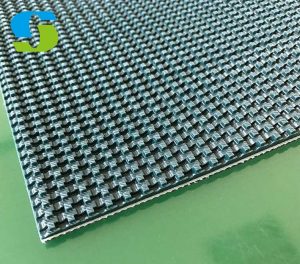
FAQ: PU vs PVC Conveyor Belts
Q1: Which type of conveyor is more popular, PU or PVC?
Neither is consistently superior. PU belts have a superior reputation for hygiene and resistance to oil, while PVC conveyor belts are effective for a variety of general applications.
Q2: Is a conveyor belt for food processing made of PVC plastic?
Some varieties of PVC conveyor belts are considered food-grade, but PU belts are typically used for direct contact with food.
Q3: What is the reason for the higher cost of PU conveyor belts?
PU materials provide superior chemical resistance, stretchiness, and compliance with regulations, all of which increase the cost of production.
Q4: Do the conveyor belts for PVC have a quicker wear rate?
In environments with a lot of oil or that have a chemical composition that is aggressive, PVC belts typically have a higher wear rate than PU belts.
Q5: Can cold weather be accommodated by using PVC conveyor belts?
PVC belts may become stiffer at low temperatures that are low; PU belts have a better performance in cold conditions.
Conclusion: PU vs PVC Conveyor Belt Is About Application Fit, Not Superiority
The query “Which is more efficient, PU or PVC?” does not have a universal answer. The PVC conveyor belt is still an exceptional solution to many industrial transport problems; it provides dependable performance at a budget-friendly cost.
Other benefits of this belt include its superior performance in environments with a high concentration of hygiene-sensitive chemicals and its ability to withstand high temperatures.
By comprehending the behavior of materials, the requirements of regulations, and the long-term goals of operations, businesses can make informed decisions about conveyor belts that maximize both cost and performance.